DigiTech XAS-SI Scott Ian Black 13

Home > DigiTech Artist Series Pedal Index > DigiTech Scott XAS-SI Ian Black 13

DigiTech Scott Ian Black 13 pedal

The DigiTech Scott Ian Black 13 is one of the most focused pedals DigiTech ever put in the Artist Series lineup. This was not built to be a polite, flexible, all-purpose distortion box. It was built to do Scott Ian. Period. Big right-hand rhythm tone, tight attack, heavy palm-muted chug, and that sharp thrash metal grind that made Anthrax sound like Anthrax.

What makes the Black 13 interesting is that it does not approach distortion the way most pedals do. There is no traditional Gain knob, and that throws some players at first. Instead, the pedal gives you a group of preset Scott Ian tones based around specific amp, cabinet, and recording-style sounds tied to different Anthrax eras. That makes it less like a normal distortion pedal and more like a little Scott Ian rig-in-a-box.

This is exactly the kind of pedal that makes the DigiTech Artist Series so fun to look back on. DigiTech was striving to do more than putting a famous name on a box. They were trying to capture a player's recorded identity and put it under your foot. Whether that idea worked for every player is another conversation, but with the Black 13, the mission was loud and clear. This thing was made for riffs.

Now, let's dive in =)
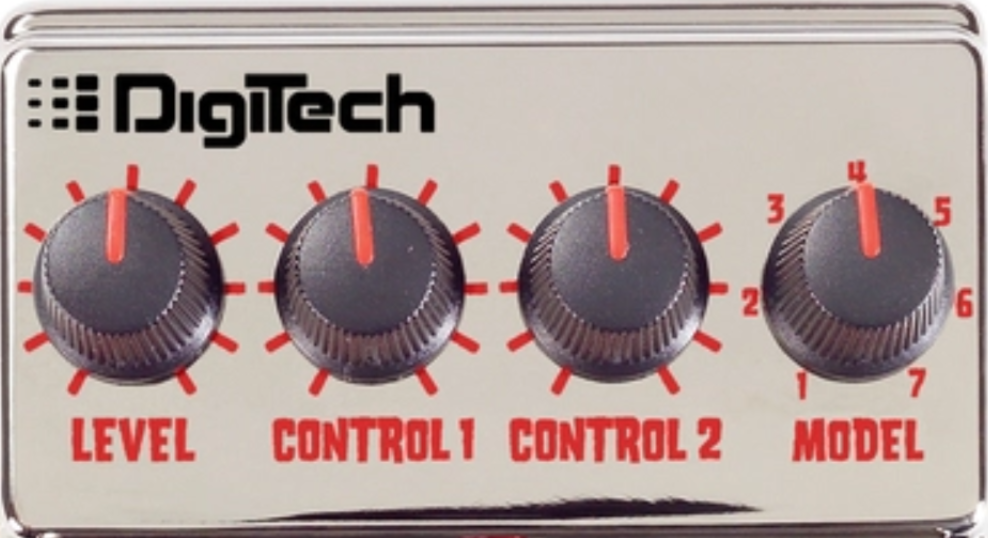

  • Controls:

  • Unlike a traditional distortion pedal covered in Gain, Bass, Mid, and Treble knobs, the Black-13 takes a completely different approach. Scott Ian's signature tones were programmed into the pedal as complete amp-and-cabinet models, so the controls are designed to shape and balance those sounds rather than build them from scratch.
    • Level controls the overall output volume of the pedal. Depending on the selected model, there is enough output available to easily match or exceed your bypassed signal. Most players use this control to balance the pedal with the rest of their rig or to give their amp's front end a little extra push.

    • Cntrl 1 changes different parameters depending on which Scott Ian model is selected. On some presets it functions much like a tone or presence control, while on others it adjusts characteristics unique to that particular modeled amplifier setup. Think of it as a context-sensitive adjustment that lets you fine tune each signature sound without overwhelming the user with dozens of knobs.

    • Cntrl 2 works the same way, providing a second model-dependent parameter. Depending on the selected preset, it may affect EQ balance, cabinet characteristics, microphone placement simulation, gain structure, or other elements programmed into the model. The exact function changes from preset to preset, which is one reason the Black-13 rewards experimentation.


    • Model Selector

    • The Model Selector is where the Black-13 separates itself from virtually every other distortion pedal DigiTech ever produced. Rather than selecting different levels of gain or different EQ curves, each position loads an entirely different Scott Ian signature rig based on amplifier, cabinet, microphone, and recording configurations associated with some of the most recognizable tones of his career. Every model has its own personality, feel, and response, making the Black-13 more like a collection of Scott Ian's favorite recorded sounds than a traditional distortion pedal.

      • Model 1: "I Am The Law"

        • If somebody handed me a Black-13 and asked me to show them what this pedal is all about, this is probably where I'd start. The tone is big, tight, and mean. Palm-muted riffs hit hard, power chords have authority, and everything feels ready for battle. There is nothing subtle about this setting. It sounds exactly like a model named after I Am The Law should sound.

      • Model 2: "Madhouse"

        • The Madhouse setting has that classic early Anthrax character all over it. Lots of grind, lots of attitude, and just enough bite to make every riff jump out of the speakers. What I like most about this one is that even with plenty of gain, the notes still stay surprisingly clear. Fast riffing never turns into mush.

      • Model 3: "March of the S.O.D."

        • This one feels like somebody drank three cups of coffee and decided to start down-picking everything in sight. It captures that raw S.O.D. energy that was never overly polished and never intended to be. The sound is aggressive, direct, and completely unapologetic. If you're looking for finesse, keep turning the knob. If you're looking for attitude, you're already there.

      • Model 4: "Protest and Survive"

        • There is an edge to this setting that immediately gets your attention. It feels angry in the best possible way. The tone cuts hard, riffs have a sharp attack, and the whole thing sounds like it was designed to start arguments. This is one of the nastier sounds in the pedal, and I mean that as a compliment.

      • Model 5: "Room For One More"

        • Scott has said that this is one of his personal favorite tones in the Black-13. It still has plenty of gain available, but there is a little more depth and fullness to the sound. The riffs feel bigger, the grooves feel heavier, and everything has a slightly more mature character compared to some of the earlier thrash-focused models. You can tell why he liked this one so much.

      • Model 6: "What Doesn't Die"

        • If the earlier models represent classic Anthrax, this one feels like the modern heavyweight version. It is tight, crushing, and incredibly versatile. You can sit and riff on this setting for an hour without realizing how much time has passed. For many players, this could easily become the most-used position on the entire pedal.

      • Model 7: "Finale"

        • Finale is where things get interesting. Model 5 may be Scott's personal favorite but Model 7 is mine because, instead of yet another variation of high-gain distortion, DigiTech went after the actual studio effect used on the track. The pitch shifting and delay create an eerie atmosphere that sounds completely different from everything else on the pedal. It is a cool reminder that the Black-13 was never intended to be just another distortion box. DigiTech was trying to recreate complete recorded moments from Scott Ian's career, and Finale might be the best example of that idea.

        Taken together, these seven models cover a surprisingly wide range of Scott Ian's recorded career, from classic Anthrax thrash and S.O.D. crossover mayhem to his later groove-heavy and modern metal tones. It is one of the most specialized pedals DigiTech ever released and remains one of the most fascinating entries in the entire Artist Series lineup.

        Hear Scott Ian play these 7 models in the vintage Digitech video below (less than 4 minutes)


    • Historical Pricing Breakdown:

      • List price: $219.95 (July 2005) Official unveiling at the Summer NAMM show)

      • Street price: $149.95 (Autumn 2005) Global commercial release to retail markets.

      • Closeout price: $99.95 (2009-2010) Shift from standard street pricing ($149.95) to end-of-life clearance pricing ($99.95) as production slowed down.

      • Complete stop of manufacturing by 2011, the Black 13 was scrubbed from active DigiTech catalog rotations.

      • As of June, 2026 Black 13s have held their value very well, and are selling from $73 to $185, depending on condition. For a mint-in-box unit, with all accessories (pedal, pedal bag, power supply, pick, manuals) going for $200 or more.


    • Technical info:

      • Power: Standard DigiTech 9 volt DC power supply operation. Battery operation may be supported depending on production configuration, but that needs further research to verify for all units.

      • Specifications: Digital Artist Series distortion/modeling pedal built around Scott Ian signature tones. Features amp, cabinet, and microphone-style modeling, mono amp output, and a Mixer output with speaker emulation for direct recording or PA use.

      • Component Variations: No major verified component variations are currently documented. Cosmetic, packaging, and production-run differences may exist, but they need further research before being treated as solid collector data.

      • Notable IC chip: DigiTech AudioDNA2 DSP platform. This pedal is not an old-school analog distortion circuit. The heart of the Black 13 is digital modeling, with the Scott Ian sounds generated inside the DSP system.

      • Component-side circuitboard image: (None available - need to crack mine open and take a pic)

    • Heritage: The Weapon Divider icon Crossroads Divider icon Experience Divider icon Red Special


    • Press the Play Button below to hear the original DigiTech Black 13 Sound Demos


    • How players actually use it:

      • For straight-up thrash rhythm work: This is where the Black 13 makes the most sense. Plug in, pick a heavier model, tighten up your right hand, and it immediately starts living in that aggressive rhythm guitar world.

      • For direct recording: The Mixer output is a big part of the pedal's appeal. It gives you speaker emulation so you can run straight into a recording interface, mixer, or PA without needing a real amp cabinet in the room.

      • For quick Scott Ian flavor: If you are chasing Anthrax-style crunch, this pedal gets you into the neighborhood fast. It will not replace Scott Ian's hands, and it will not magically make your picking tighter, but it gives you the right kind of sonic attitude to work with.

      • For heavy rhythm layers: This pedal can be a lot of fun when double-tracking rhythm parts. The preset nature of the tones makes it easy to recall a sound and stack parts without constantly fiddling with gain and EQ.

      • For collectors who love oddball DigiTech ideas: The Black 13 is not just another distortion pedal. It is a snapshot of the era when DigiTech was willing to build very specific artist-based machines that no other major pedal company would have probably attempted at that scale.


    • Suggested starting settings:

      • Classic thrash rhythm: Set Level for unity with your bypassed signal, choose one of the tighter high-gain models, and keep Cntrl 1 and Cntrl 2 near noon until you hear what that particular model is doing.

      • Direct recording test: Use the Mixer output into your interface or recorder, start with the controls at noon, and adjust from there. Do not judge it the same way you would judge the amp output into a guitar amp.

      • Big amp setup: Run the normal output into a clean or barely breaking-up amp. Let the pedal be the main distortion source instead of stacking it into an already saturated amp.

      • Tighter palm mutes: Back off low-end-heavy settings if the bottom gets too thick. The best Black 13 sounds usually come alive when the low end is heavy but still controlled.

      • Lead experiment: Even though this pedal is really about rhythm, try pushing the Level a little and using one of the smoother models for leads. It may not be what the pedal is famous for, but there are usable sounds hiding in there.


    • Collector notes:

      • The Black 13 is one of those DigiTech pedals that makes more sense the longer you collect this stuff. On paper it is almost too specific, but that is exactly what gives it personality.

      • Complete examples with the original box, manual, power supply, and paperwork are always more desirable. Artist Series pedals were often bought by players, used hard, and then tossed into gig bags like any other working pedal.

      • The graphic design matters on this one. A clean top surface, readable text, and a good looking treadle area make a big difference for display collectors.

      • This pedal sits in a strange but cool lane. It is not a generic metal pedal, not a normal amp modeler, and not a simple signature distortion. It is more like a little Anthrax recording concept in stompbox form.

      • Because it is tied so directly to Scott Ian, it also appeals to Anthrax fans who may not normally chase every DigiTech release. That crossover interest can make nice examples harder to replace than people expect.


    • Known quirks and tips:

      • Do not look for a Gain knob. That is not how this pedal works. The gain structure is baked into the selected model, which is part of the whole idea.

      • The Mixer output and the amp output are not meant to be judged the same way. One is for direct use with speaker emulation, and the other is for feeding a guitar amp.

      • If the pedal sounds too compressed or too processed through your amp, try lowering the amp's gain and running the amp cleaner. Let the Black 13 do the heavy lifting.

      • Like many digital DigiTech pedals from this era, using the proper power supply matters. A weak or incorrect supply can cause noise, glitches, or behavior that makes the pedal look guilty when the power source is really the problem.

      • This is not the pedal I would hand someone looking for warm blues breakup. That would be like bringing a bulldozer to trim hedges. It can be done, but there are better tools for that job.


      Hear the DigiTech Scott Ian Black 13 in action:


      External Links:


      Home Divider icon America's Pedal Divider icon FX-Series Divider icon X-Series Divider icon D-Series Divider icon Artist Series Divider icon Performer Series Divider icon Hardwire Series Divider icon Specialty Pedals Divider icon New Releases Divider icon Field Guide Divider icon Serial Number info Divider icon FX literature Divider icon What's New? Divider icon FX Tech info Divider icon Links Divider icon Disclaimer/Legal/Contact Us