DigiTech HardWire SC-2 Valve Distortion
Home >
DigiTech Hardwire Series Pedal Index >
DigiTech HardWire SC-2 Valve Distortion

The DigiTech HardWire SC-2 Valve Distortion arrived with the original HardWire lineup in 2008, sitting right between the CM-2 Tube Overdrive and the later TL-2 Metal Distortion. That middle position tells you a lot about it. The SC-2 can cover classic-rock crunch, thick hard-rock rhythm, singing lead tones, and a surprising amount of modern gain without locking you into one narrow sound.
What I like about the SC-2 is how easy it is to shape around the rest of your rig. The separate Low and High controls give it far more flexibility than a typical three-knob distortion, while the Crunch/Saturated switch changes the feel as much as the amount of distortion. Crunch stays more open and responsive. Saturated adds compression, sustain, and enough gain to move well beyond old-school rock.
The word "Valve" is describing the sound and response DigiTech was chasing. There is no tube hiding inside the enclosure. This is an all-analog solid-state distortion circuit, running with the extra internal headroom that helped define the original HardWire range.
Okay, let's open the valve =)
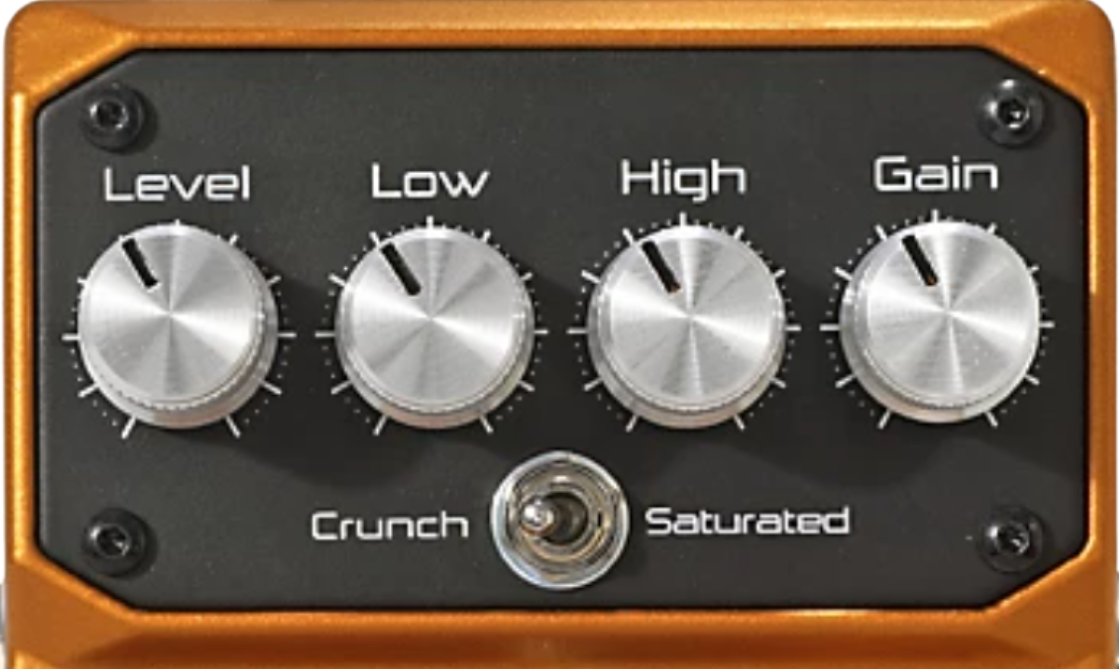
Controls:
- Level: Sets the overall output volume. The SC-2 has enough output to match the bypassed signal, lift a lead above the band, or push the front end of an amp harder.
- Low: Boosts or cuts the bass response. Back it down to tighten palm-muted rhythm work or bring it up when a bright amp or thin pickup needs more body.
- High: Boosts or cuts the treble response. This control can add presence and pick definition or smooth out a rig that gets sharp once the gain comes up.
- Gain: Controls the amount of distortion and sustain. The lower half of the range covers gritty rhythm and classic crunch; higher settings reach thick hard-rock and modern high-gain territory.
- Crunch/Saturated Voice Switch: Selects the SC-2's two distortion voices. Crunch is more open, dynamic, and classic in feel. Saturated adds gain, compression, low-end weight, and a smoother sustain for heavier rhythm and lead sounds.

Pricing Breakdown:
- List Price: $149.00 (January 2008 at the Winter NAMM Show in Anaheim, California)
- Street Price: $99.99 (2008 - 2015)
- Closeout price: $49.99 - $59.99 (2015 - Musician's Friend logged a final closeout price of $41.98 "Stupid Deal of the Day" for their last few remaining SC-2s)
- Current Used Market Value (July 2026): $90.00 - $200.00+ (Prices on platforms like Reverb have fluctuated or climbed over the years due to the HardWire series achieving a cult "sleeper" status after being phased out in 2015)
- The Regret Factor is huge on this one. Players and collectors look back on the SC-2 closeout era as one of the ultimate missed opportunities. Noting that these pedals routinely sell today for double or even triple the closeout price, one player commented, "I should have bought five of them!"

Technical info:
- Power: One 9V alkaline battery or an optional Harman PS200R 9V DC power supply. The owner's manual specifies a typical current draw of 20mA and typical
power consumption of 180mW with the optional supply.
- Internal Operating Voltage: The original HardWire pedals used voltage-boosting circuitry to provide more operating headroom than a conventional 9V pedal.
DigiTech promoted this as protection against unwanted input clipping from high-output pickups. The exact internal rail voltage for the SC-2 needs further documentation
to verify.
- Specifications: Mono 1/4-inch input and output. Input impedance is greater than 500 kOhms with the effect on; output impedance is 1 kOhm with the effect on.
Published dimensions are 5.25 inches long, 3.5 inches wide, and 2.15 inches high. Weight is 1.3 pounds.
- Signal Path: Analog solid-state distortion circuit with true HardWire bypass. Despite the Valve name, the SC-2 does not contain a vacuum tube and is not a
digital amp model.
- The Marshall connection: Players have said countless times that the SC-2 has a Marshall-style or British-voiced distortion, and once you listen to one,
you'll understand why. Crunch mode sounds like a Plexi, or a JCM800, while Saturated mode kicks in a hotter gain that sounds like a modified British amp. DigiTech's own
literature describes Crunch simply as a "classic balanced distortion" and confirmed that Saturated mode adds the extra gain stage. With all of that said, I have not
found anything officially showing that the SC-2 was designed as an exact model of a particular Plexi or JCM800 amplifier.
- EQ Design: The SC-2 has separate Low and High controls but no dedicated Mid control. Some people assume that means the pedal has one fixed midrange voice,
but the Crunch/Saturated switch changes that part of the sound too. Crunch has the stronger mids and is designed to cut through a band mix, while Saturated adds gain
and pulls some of those mids back for a heavier, more compressed sound. The Low and High controls then let you shape the frequencies around those two basic voices. I
have not found any documentation showing that DigiTech left off the Mid control for a specific technical reason, so anything beyond that would be speculation.
- Construction: Heavy cast-metal enclosure, metal jacks and control hardware, custom metal knobs, and the oversized HardWire footswitch and battery-access
assembly.
- Included Accessories: Originally shipped with the StompLock™ knob guard, Foot Switch Glow Sticker, hook-and-loop pedalboard pad, owner's manual, and
warranty card.
- Component Variations: None noted.
- Notable IC chip: No single IC has been officially identified as the defining component of the SC-2. This is a multi-stage analog distortion circuit, and
DigiTech's owner's manual confirms that Saturated mode adds an additional gain stage for greater sustain and distortion. The pedal's sound comes from the interaction
of its gain stages, clipping components, active Low and High EQ, voicing circuit, and elevated internal operating voltage rather than one so-called "magic chip." The
exact IC types used in production examples still need to be confirmed from clear circuitboard photographs (I will be cracking mine open) or factory documentation.
- Component-side circuitboard image: (Coming soon)

The SC-2 lived on inside the DOD Gunslinger
Here is where the SC-2 story gets really interesting and one of the many reasons why I love creating these pages. Several years after the HardWire Series was introduced, DOD used the circuit from the SC-2's Saturated mode as the foundation for the Gunslinger MOSFET Distortion.
That is not speculation or something pedal collectors pieced together years later. DOD actually acknowledged the connection when the Gunslinger was released. They took the Saturated side of the SC-2, reworked it, added MOSFET clipping, and turned it into a new pedal with its own sound and personality.
The Gunslinger is not simply an SC-2 in a smaller box. The circuit was tweaked to give it a more dynamic, amp-like response, but the family connection is absolutely there. The Gunslinger started with one half of a pedal that a lot of players had overlooked for years.
That changes the way I look at the SC-2. This was not just another distortion pedal that disappeared when the HardWire Series ended. Part of its design survived, was refined, and came back as one of the standout pedals from the modern DOD revival.
If you own both pedals, put the SC-2 in Saturated mode and spend some time playing it beside the Gunslinger. They are not identical, but once you know the story, that shared family resemblance starts making a whole lot more sense.
Heritage: (HardWire and DOD gain family)
HardWire CM-2 Tube Overdrive
 HardWire TL-2 Metal Distortion
DOD Gunslinger MOSFET Distortion

How players actually use it:
- As your main distortion: Plug the SC-2 into a clean amp, put it in Crunch mode, and you already have the foundation for a great rock tone. There is enough distortion to give the sound some real authority, but it still responds to your picking and cleans up nicely when you roll back the guitar's volume.
- For big hard-rock rhythm tones: This is where Saturated mode really starts earning its keep. Set the Gain somewhere around noon, pull the Low control back just a little, and the SC-2 delivers a thick rhythm sound that stays tight when you start digging into it.
- For lead work: Saturated mode gives you the extra gain, compression, and sustain needed to make single notes sing. Bring the Level up enough to step out in front of the band and use the High control to take off any sharp edges. The result is a smooth, powerful lead tone that can hang onto a note for days.
- Do not overlook the lower-gain sounds: Most people see the word "Distortion" and immediately start turning the Gain clockwise. Back it down, leave the pedal in Crunch mode, and there are some excellent lower-gain rock and blues sounds hiding in there. It also cleans up far better from the guitar's volume control than many people would expect.
- To give a smaller amp some muscle: The SC-2 can make a bright or slightly thin combo sound much bigger than it really is. Add a little Low, bring the Level up, and suddenly that little amp has some weight behind it. Just remember that this pedal has plenty of bass on tap, so a little goes a long way.
- Stacked with an overdrive: Put a CM-2 or another low-gain overdrive in front of the SC-2 and you can tighten the bottom end, sharpen the attack, and push it into even heavier territory. Keep the overdrive's gain fairly low and use its Level control to hit the SC-2 harder. When the two pedals are dialed in correctly, they make a pretty formidable team.

Suggested starting settings:
- Classic-rock crunch: Crunch mode, Level at noon, Gain around 10 to 11 o'clock, Low at noon, and High around 1 o'clock.
- Open hard-rock rhythm: Crunch mode, Level around 1 o'clock, Gain at noon, Low around 11 o'clock, and High at noon.
- Modern saturated rhythm: Saturated mode, Level at noon, Gain around 1 to 2 o'clock, Low around 10 to 11 o'clock, and High around noon. Start with the Low control restrained, then add only what the amp can carry cleanly.
- Thick lead: Saturated mode, Level around 1 to 2 o'clock, Gain around 2 o'clock, Low at noon, and High around 11 o'clock.
- Low-gain amp push: Crunch mode, Level around 2 o'clock, Gain around 8 to 9 o'clock, and both EQ controls at noon. Adjust the Low control first if the amp begins to feel loose.

Collector notes:
- As I mentioned before, the SC-2 was one of the original HardWire pedals introduced in 2008, and those early examples proudly carried the large HardWire logo across the front. Later in the production run, DigiTech changed the cosmetics and made its own name more prominent on the pedal. The circuit remained the same, but having both versions gives HardWire collectors another variation to chase.
- If you are looking for a complete SC-2, there was quite a bit in the original box. Along with the pedal, DigiTech included the StompLock™ knob guard, Foot Switch Glow Sticker, hook-and-loop pedalboard pad, owner's manual, warranty card, and the usual paperwork. Most players bought these pedals to use, so the StompLock, stickers, and loose paperwork were often separated from the pedal years ago. Finding one with everything still together is becoming much more difficult.
- The SC-2's metallic finish is beautiful, but it is not especially forgiving. Corner chips, small scratches, and wear around the edges are all common. The large polished footswitch also seems to collect scratches if you look at it too hard. None of that affects the sound, of course, but a truly clean example will immediately get a collector's attention.
- Here is where I think the SC-2 gets really interesting. It has spent years living in the shadows of pedals like the RV-7 and Supernatural, while many players never gave the HardWire distortion pedals a serious look. That has kept the SC-2 from becoming ridiculously expensive, but I would not count on that lasting forever. As more people rediscover just how good these original HardWire pedals were, clean and complete examples are only going to become harder to find.
- My advice is simple: if you find a clean SC-2 at a reasonable price, especially one with the original box and accessories, do not wait too long to make up your mind. This is exactly the kind of sleeper pedal people tend to ignore until everybody suddenly decides they need one.

Known quirks and tips:
- The Low and High controls are active, so noon is the neutral starting point. Small moves matter, especially once the Gain control is above noon.
- Saturated mode can feel louder and fuller than Crunch even when the Level knob has not moved. Expect to rebalance the output if you switch voices during a set.
- The SC-2 has a generous low end. That sounds huge alone, but too much bass can disappear into a band mix or make a dirty amp feel sluggish. Backing the Low control down is often the quickest fix.
- High-output humbuckers can push the Saturated voice into heavy compression sooner than single coils. If the attack feels buried, lower the Gain before adding more High.
- Use a normal regulated 9V center-negative supply. The pedal handles its extra headroom internally, so feeding it an 18V adapter is unnecessary and not recommended.

Hear the DigiTech HardWire SC-2 Valve Distortion in action:
External Links:
Home
America's Pedal
FX-Series
X-Series
D-Series
Artist Series
Performer Series
Hardwire Series
Specialty Pedals
New Releases
Field Guide
Serial Number info
FX literature
What's New?
FX Tech info
Links
Disclaimer/Legal/Contact Us
|