DigiTech HardWire CR-7 Stereo Chorus
Home > DigiTech Hardwire Series Pedal Index > DigiTech HardWire CR-7 Stereo Chorus

The DigiTech HardWire CR-7 Stereo Chorus is one of those pedals that reminds me why the HardWire Series has aged so well. This was not just DigiTech tossing another chorus pedal into the market. The CR-7 gave players seven different chorus voices, true stereo inputs and outputs, true hardwire bypass, high-voltage operation, and the kind of rugged metal enclosure that made the HardWire line feel like serious working gear.

What I like about the CR-7 is that it covers a lot of ground without becoming complicated. You get the basic controls every chorus player expects: Level, Speed, and Depth. Then the Type knob opens up the whole personality of the pedal. Studio, Multi, Modern, Boutique, Analog, Jazz, and Vintage each have their own thing going on. Some are clean and polished. Some get lush and wide. Some have that wobbly, imperfect charm that makes chorus fun in the first place.
Okay, let's dive in =)
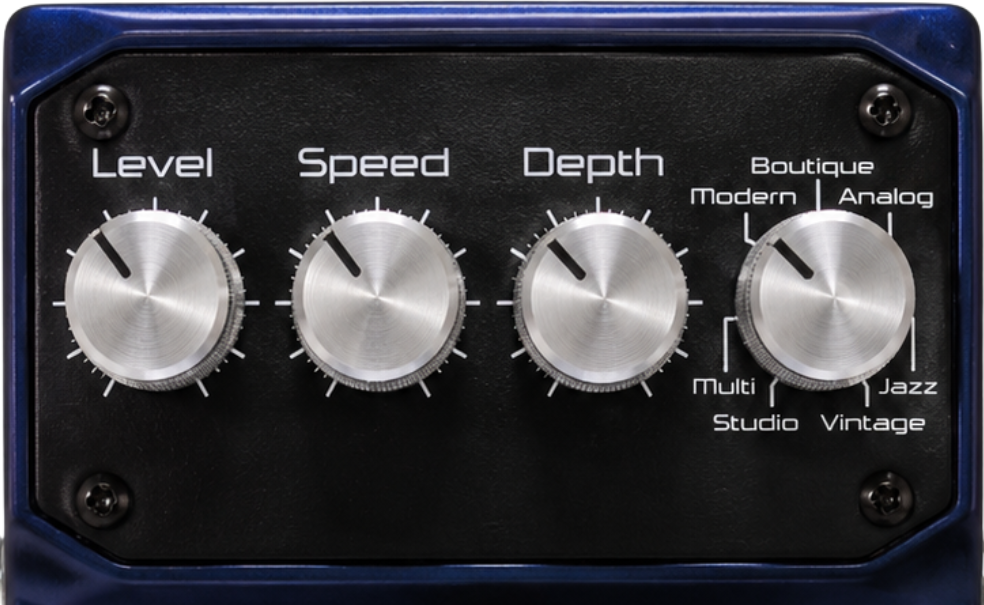
Controls:
- Level: Controls the overall output volume of the effect. Most chorus pedals simply sit at unity gain and call it a day, but the CR-7 gives you enough output to compensate for perceived volume loss or to slightly push the front end of your amp if you want a little extra sparkle and presence.
- Speed: Adjusts how quickly the chorus sweeps and moves. Lower settings produce slow, gentle movement that can almost disappear into the background while still making the guitar feel larger and wider. Turn it up and the effect becomes much more obvious, moving from subtle shimmer into full-on swirling modulation territory.
- Depth: Controls the intensity of the modulation effect. At lower settings, the CR-7 acts more like a sweetener, adding width and dimension without drawing attention to itself. Push it higher and the pitch modulation becomes deeper and more dramatic. This control has a huge influence on the personality of every mode.
- Type Selector: This is where the fun begins. The CR-7 contains seven completely different chorus voices, each with its own feel and personality:
- Studio: Probably the easiest mode in the pedal to get along with. It makes your guitar sound bigger, wider, and more polished without constantly reminding you that you're using a chorus pedal.
- Multi: This one gets huge in a hurry. Big stereo spread, lots of movement, and enough lushness to keep ambient players busy for hours.
- Modern: Clean, smooth, and refined. If you're after chorus that feels current rather than vintage, start here.
- Boutique: This mode has a little more personality to it. A little less polished, a little more movement, and a little more character.
- Analog: Warm and familiar. If you've spent time around older bucket brigade chorus pedals, this one will probably feel like home.
- Jazz: Subtle and tasteful. This is the setting for players who normally say they don't like chorus pedals.
- Vintage: The mode that probably sends most players straight back to the late 1980s. Add a little reverb and you'll find yourself playing clean chords for far longer than you planned.
- Footswitch: Activates or bypasses the effect using HardWire's true bypass switching system. Like the rest of the HardWire Series, the CR-7 includes the removable Foot Switch Glow Sticker to make it easier to find on dark stages.

Pricing Breakdown:
- Official MSRP: $189.95
- Street Price: $139.95
- Clearance Price: $109.95 - $119.95

Technical info:
- Power: 9V alkaline battery or Harman PS200R 9V DC power supply. Published specs list typical current draw at approximately 70mA.
- Internal Operating Voltage: One of the defining features of the HardWire Series was DigiTech's use of internally generated high-voltage rails. While powered from an ordinary 9V supply, the CR-7 internally operates at a significantly higher voltage than many competing pedals of the era, providing additional headroom and helping prevent clipping on hot input signals.
- Specifications: Stereo input and output with Input 1 Mono, Input 2, Output 1 Mono, and Output 2 connections. Input impedance is greater than 1 MOhm in stereo operation and greater than 500 kOhm in mono operation with the effect active. Output impedance is 1 kOhm with the effect engaged. Physical dimensions are approximately 3.5 inches wide, 5.5 inches long, and 2.15 inches high with a weight of approximately 1.3 pounds.
- Bypass Type: True HardWire bypass switching. When bypassed, the CR-7 removes itself completely from the signal path rather than routing the guitar through a buffered bypass stage.
- Signal Path: Fully stereo digital signal processing with true stereo inputs and outputs. This wasn't simply a mono chorus with a second output jack added for convenience. The CR-7 was designed from the ground up as a stereo modulation processor.
- Construction: Heavy cast-metal enclosure with metal jacks, metal footswitch assembly, and oversized hardware throughout. The HardWire Series earned its reputation for durability honestly. These things were built like tanks.
- Included Accessories: Originally shipped with the StompLock™ knob guard, Foot Switch Glow Sticker, hook-and-loop pedalboard pad, owner's manual, and warranty documentation.

Heritage: RV-7  DL-8 TR-7
How players actually use it:
- Clean stereo spread: Run it in stereo and the CR-7 really starts showing off. The Studio and Modern modes are especially good for making a clean guitar sound bigger without covering up the original tone.
- 80s clean shimmer: Set the Level around noon, keep the Speed fairly low, bring the Depth up to taste, and try Studio, Modern, or Vintage. Add a little compression and delay, and you are right in that glassy clean rhythm world.
- Lush ambient texture: Multi, Boutique, and Vintage are the fun zones for big ambient sounds. Put a delay or reverb after it and the CR-7 can turn simple chord work into a huge moving pad.
- Subtle always-on thickening: The Modern and Jazz modes can work really well as an always-on sweetener. Keep the Depth low and the Level conservative, and the pedal adds motion without taking over the whole rig.
- Recording in stereo: This is one of the CR-7's strongest uses. Because it has true stereo processing, it can make layered guitar tracks feel wider without having to fake it later with plug-ins.

Suggested starting settings:
- Wide clean chorus: Type on Studio, Level around noon, Speed around 10 o'clock, and Depth around 1 o'clock. This gives you a polished chorus that works great for clean rhythm parts.
- Lush multi-voice swirl: Type on Multi, Level around 1 o'clock, Speed around 11 o'clock, and Depth around 2 o'clock. This is the big, pretty, wet chorus setting that makes you want to play suspended chords all afternoon.
- Warm analog flavor: Type on Analog, Level around noon, Speed around 10 to 11 o'clock, and Depth just past noon. This keeps things warm and musical without getting too wobbly.
- Jazz clean polish: Type on Jazz, Level around 11 o'clock, Speed low, and Depth around noon. Nice for clean single-note work, mellow chords, or anything where you want movement without a huge chorus blanket over everything.
- Vintage dream machine: Type on Vintage, Level around noon, Speed around 9 to 10 o'clock, and Depth around 2 o'clock. Add reverb after it and enjoy the ride.

Collector notes:
- Like the other original HardWire pedals, the CR-7 came with the StompLock™ knob guard, Foot Switch Glow Sticker, hook-and-loop pedalboard pad, warranty card, and manual. Complete examples are always more interesting to collectors.
- The CR-7 does not usually get the same attention as the RV-7 Reverb or Supernatural, but chorus players know this one is a serious pedal. That makes it one of the more interesting HardWire sleepers.
- Watch for the usual HardWire collector details: footswitch logo style, country of manufacture, outer finish, box condition, and whether the accessories are still with it.
- Because chorus pedals often lived on working boards, plenty of CR-7 pedals show scratches, worn corners, missing bottom pads, or missing StompLocks. That does not bother me much if the pedal works correctly, but complete clean examples are getting harder to ignore.
- The stereo jacks matter on this one. If you are buying used, test both inputs and both outputs if possible. A CR-7 with fully working stereo operation is the one you want.

Known quirks and tips:
- The CR-7 is easy to judge too quickly. If one mode does not grab you, move to another one. The seven voices are different enough that your favorite setting might not be the first one you try.
- The Multi mode can get big fast. That is part of the fun, but in a band mix you may need less Level and Depth than you think.
- If the chorus feels too obvious, slow the Speed down before you back off the Depth. A slower chorus often feels more expensive and less seasick.
- Use a good power supply. The CR-7 draws more current than a simple analog chorus, and clean power helps keep the whole rig behaving.
- Do not forget the stereo side of this pedal. Running it mono is perfectly fine, but stereo is where the CR-7 earns the full name on the front.

Hear the DigiTech HardWire CR-7 Stereo Chorus in action:
External Links:
Home
America's Pedal
FX-Series
X-Series
D-Series
Artist Series
Performer Series
Hardwire Series
Specialty Pedals
New Releases
Field Guide
Serial Number info
FX literature
What's New?
FX Tech info
Links
Disclaimer/Legal/Contact Us
|