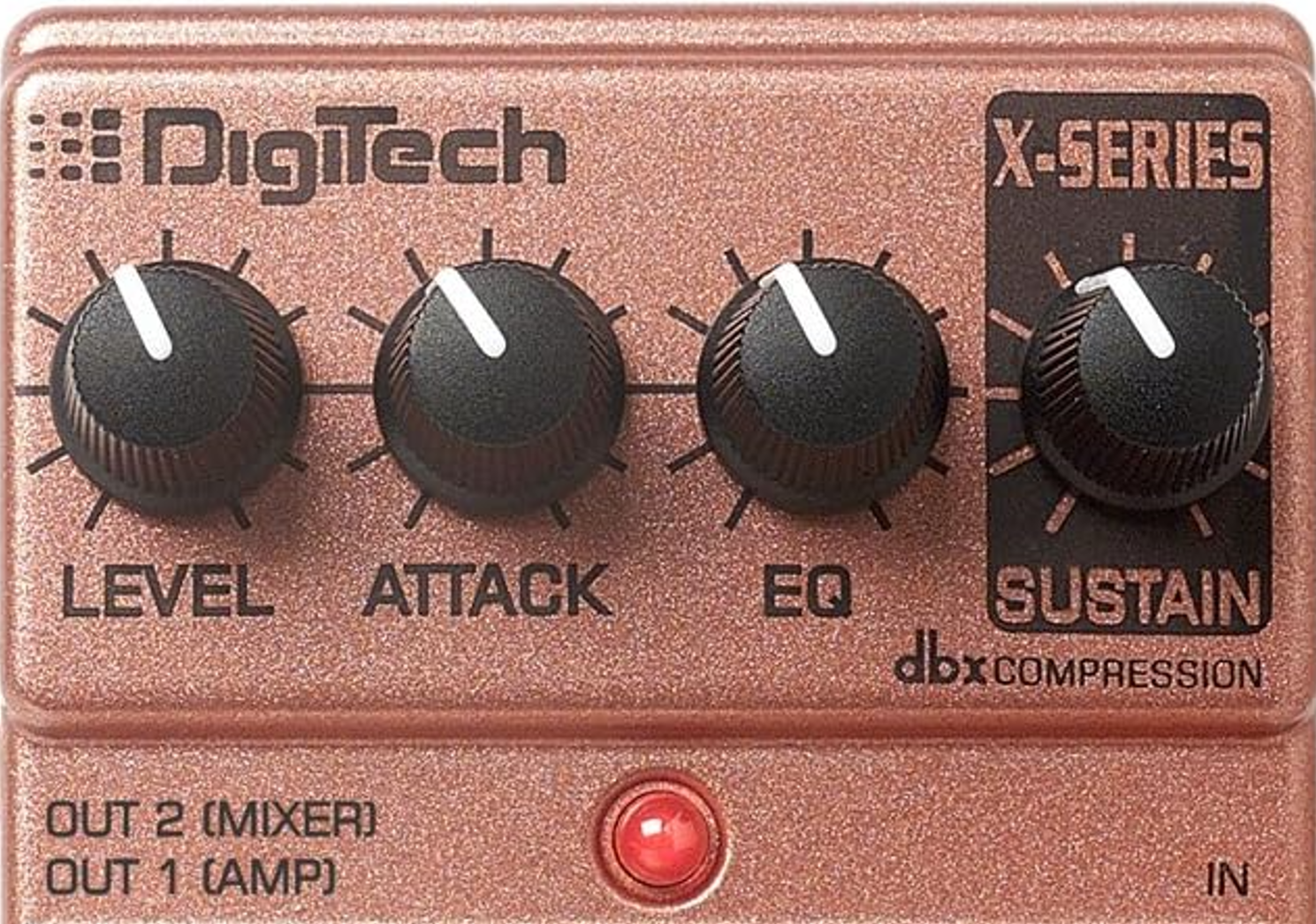
The DigiTech XMS Main Squeeze is one of those pedals that does not scream for attention, but once you spend time with it, you realize how important it really is. Released as part of DigiTech's early 2000s X-Series line, the Main Squeeze took a studio idea most guitar players had heard about for years, compression, and put it into a stompbox that was much more flexible and natural-feeling than a lot of players expected from a pedal in this price range.
That is really the story here. A lot of compressor pedals can feel grabby, squashy, or like they are sitting on top of your tone instead of helping it. The Main Squeeze aimed in the other direction. With dbx OverEasy compression behind it, DigiTech built this one to smooth things out, add sustain, and keep your dynamics under control without stripping away all the life from your playing. In other words, it was trying to feel more like a useful studio tool than a gimmick box.
From the manual:"The Main Squeeze Compressor/Sustainer is a high quality compressor using world famous dbx® dynamics processing. DigiTech’s exclusive AudioDNA™ technology gives you studio quality comression in an easy to use stompbox design. Experimenting with the Main Squeeze controls provides you a variety of application settings, from mild compression that subtly quiets peak signals, to full on sustain for squeezing the last drop out of each note during those great solos."
Now, let's get into it =)
Controls:
Level: Sets the overall output level of the pedal.
Attack: Adjusts how quickly the compression clamps down on your signal. Slower settings let more of the pick attack through, while faster settings smooth things out sooner.
Sustain: Controls the amount of compression and sustain. Lower settings stay subtle and natural. Higher settings bring up more sustain and leveling.
List price: $69.95 (May 2006)
Technical info:
Circuitry: Digital compressor/sustainer with dbx OverEasy compression
Construction: Heavy-duty metal housing
Dimensions:
Length: 4 15/16 inches (approx. 125 mm)
Width: 3 1/8 inches (approx. 79 mm)
Height: 2 1/8 inches (approx. 54 mm)
Weight: 1.38 lbs (approx. 0.63 kg)
Input Impedance: 1 MOhms
Output Impedance: 100 Ohms
Power Supply: 9V battery or DigiTech PS200R 9V DC adapter
Battery Life: Approximately 4 hours continuous use
Special feature: dbx OverEasy compression voiced for guitar
Component-side circuitboard image: (On the to-do list)
Heritage:
This section is different than all of the other X-Series Heritage sections because the compression in the Main Squeeze does not give you as neat of a straight-line pedigree like the Hyper Phase to the SP-7 does.
The Main Squeeze sits at the point where DOD/DigiTech compression started leaning away from the older analog stompbox approach toward a more studio-minded design philosophy. Earlier DOD compressors handled the basic job, but the Main Squeeze brought dbx OverEasy compression into the X-Series, which gave it a smoother and more refined feel under the fingers.
In the bigger family picture, it belongs to that same early 2000s DigiTech period where the company was using DSP to make pedals feel more polished and more versatile.
What came after it was not necessarily a one-to-one "next model" replacement so much as a continued move toward cleaner, more professional-grade pedal design in the later DigiTech and HardWire years.
Now, this is where the Main Squeeze gets more interesting than people usually give it credit for...
Compression is not one of those effects that gets demoed with wild sounds and jaw-dropping sweeps. It is usually more subtle than that. But that does not make it less important. In a lot of ways, it makes it more important, because when a compressor is doing its job right, you do not always notice the pedal itself. You notice that the guitar suddenly feels better under your hands.
That is what the Main Squeeze was built for. This pedal is not trying to become the whole story. It is trying to make the rest of your rig behave better. Clean tones get more even. Funk parts get snappier. Country lines get that nice pop. Chords hold together better. Leads stay hanging on a little longer without having to drown everything in gain.
And that dbx name really matters here. DigiTech was not just tossing around a studio buzzword for marketing. dbx had a serious reputation in outboard compression, so putting that kind of approach into an accessible guitar pedal made this one feel more legitimate than a lot of bargain-bin compressors from the same era.
The funny thing is, pedals like this often get overlooked because they are not dramatic enough in a quick test. A distortion pedal can win you over in five seconds. A delay can too. Compression is different. It usually wins you over after ten or fifteen minutes, when you suddenly realize your guitar feels easier to play and your signal chain sounds more finished.
That is why I think the Main Squeeze deserves more attention than it usually gets. It is one of those utility pedals that quietly earns its place.
One other thing worth pointing out is where this pedal really shines musically.
What kind of player tends to appreciate it most:
Clean-tone players: If you like polished cleans, this pedal makes a lot of sense. It helps keep everything even and musical without flattening the life out of your tone.
Country and chicken-pickin' players: This is exactly the kind of application where a compressor earns its keep. It helps notes pop, keeps picking articulate, and gives that familiar snap people chase.
Blues and roots players: Used carefully, it can add a little extra body and sustain without turning your rig into something glossy or over-processed.
Players switching between pickups a lot: One of the underrated benefits of compression is how it helps smooth out the jump between a bright bridge pickup and a warmer neck pickup.
Anyone building a more "finished" pedalboard: The Main Squeeze is not always the pedal that gets talked about first, but it is often the kind of pedal that makes the whole board work better once it is there.
That tells the story pretty well. This is not a flashy novelty pedal. It is the kind of thing players keep around because it is useful, musical, and harder to replace than people assume.
Press the Play Button below to hear the original DigiTech Main Squeeze Sound Demo (2003)
How players actually use it:
Always-on tone support: This is probably the most common real-world use. Set it mildly, leave it on, and let it smooth things out across your whole rig.
Country snap and pop: The Main Squeeze can help those quick picked notes jump out with more authority, especially on clean or edge-of-breakup tones.
Lead sustain without more gain: If you want notes to hang on longer but do not want to pile on more distortion, this pedal can get you there in a much cleaner way.
Balancing uneven dynamics: Some players dig in hard, some pickups hit harder than others, and some guitars are just a little all over the place. This pedal helps bring that under control.
Tightening funk rhythm parts: Set right, it can make percussive rhythm playing feel more focused and more professional.
Helping clean arpeggios sit better: On cleaner passages, especially when recording, compression can make individual notes feel more connected and more polished.
Suggested starting settings:
Subtle always-on support: Sustain low, attack moderate, level at unity. This is a good place to start if you just want the pedal to help without announcing itself.
Country clean snap: Sustain around medium, attack quick enough to keep things tight, level slightly boosted to add presence.
Singing clean lead: Sustain a little higher, attack adjusted so your pick still comes through, level set to match or slightly push the amp.
Funk rhythm polish: Lower sustain, quicker response, and a carefully matched level so the pedal tightens the part without sounding overly processed.
This is one of those pedals that tends to earn its keep the old-fashioned way. It may not be the first one people brag about when they post a pedalboard photo, but give it a little time under your foot and it starts making everything around it feel more dialed in.
Collector notes:
The Main Squeeze is one of the quieter entries in the X-Series family, which is exactly why it can be overlooked by collectors chasing the more dramatic models.
That is a mistake, because this pedal tells an important part of the DigiTech story. It shows the company was not just thinking about wild sounds. They were also trying to bring more refined, studio-minded tools into the stompbox world.
Most examples you find probably spent actual time on a board. Compression pedals are working tools, so wear around the treadle area and edges is completely normal.
Because it is not one of the "headline" X-Series pedals, it can still be a fun one to track down without the same attention some of the more famous models get.
Complete examples with the box, paperwork, and hang tags are worth hanging onto because utility pedals like this often got separated from their packaging early in life.
It is also a nice representative piece if you are trying to show the full range of what the X-Series actually was. Not just distortion, not just weird DSP tricks, but real everyday tools too.
Known quirks and tips:
Like a lot of compressors, the Main Squeeze rewards restraint. If you crank it too hard, it can start feeling less natural and more "processed" than some players want.
The Attack control matters more than people think. Tiny changes there can make the pedal feel either lively and responsive or much more smoothed-over.
It usually makes the most sense early in the signal chain, especially before modulation and delay.
Any compressor can raise the apparent noise floor when pushed hard, so if you hear more hiss than you want, back the sustain down a little and re-balance the level.
What I like about the Main Squeeze is that it understands its job. It is not trying to overpower your sound or distract from your playing. It is there to support what you are doing and make it feel better, smoother, and more controlled.
To me, that makes it one of the more underrated pedals in the X-Series lineup. It is useful, musical, and built around an idea that never really goes out of style. That gives it value both as a player and as a collector. -Ron