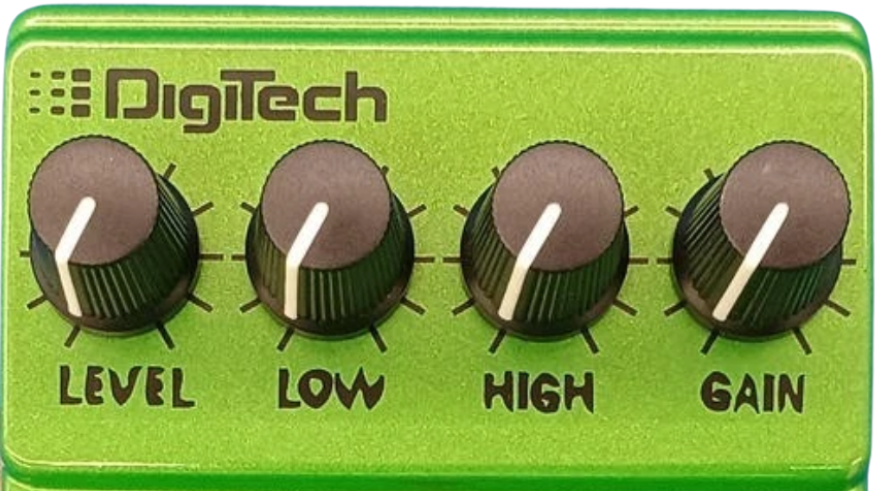
The DigiTech DBM Bad Monkey Tube Overdrive is one of those pedals that proves a point I have made for years. Sometimes the gear that players actually love is not the rarest, the most expensive, or the one with the fanciest boutique story attached to it. Sometimes it is the pedal that sat in music store display cases, pawn shops, bedroom rigs, and gig bags for years before the rest of the world finally caught up.
The Bad Monkey was released in May, 2004, and landed right in that affordable DigiTech workhorse era. At first glance, most people wrote it off as another Tube Screamer-style overdrive, but that is selling it short. The basic midrange push is definitely in that family, but the separate Low and High EQ controls gave players a lot more room to fine tune it than the usual single tone knob overdrive. Add the Amp Out and cabinet-emulated Mixer Out, and you can see DigiTech doing what DigiTech often did best: taking a familiar idea and making it more useful for regular players in the real world.
Of course, years later the internet re-discovered the Bad Monkey when Josh Scott put out a video in 2023 titled "The Bad Monkey vs Everything". The pedal world had a meltdown and used prices went absolutely bananas. Sorry, I had to say it. The funny part is that a lot of players already knew this pedal was good. They had been using them quietly for years while everyone else was chasing whatever overdrive was fashionable that month.
Now let's get into it!
Controls:
Level: Controls the overall output volume of the pedal. One thing I have always liked about the Bad Monkey is that DigiTech gave it plenty of output on tap. This pedal can easily push the front end of a tube amp harder than many people expect. That is one reason players started using it not just as an overdrive, but also as a boost pedal. If you are stacking it into another drive or already running a slightly dirty amp, the Level control becomes extremely important because this pedal can absolutely wake up an amp in a hurry.
Low: This is one of the controls that separates the Bad Monkey from a lot of the basic Tube Screamer-style pedals people compare it to. Instead of locking players into a fixed low-end response, DigiTech gave you the ability to shape the bass directly. If your amp sounds thin, you can fatten it up. If things start getting muddy, you can tighten the bottom back down. A lot of players miss the magic of this pedal because they leave the Low control cranked too high. Small adjustments here can completely change how the pedal feels under your fingers.
High: The High control works alongside the Low knob to give the Bad Monkey far more flexibility than most people expect from an affordable overdrive pedal. Bright amps, dark amps, single coils, humbuckers... this control helps the pedal adapt instead of forcing every rig into the same sound. Turn it up and the pedal gets more bite and attack. Back it down and the Bad Monkey smooths out beautifully for warmer blues and classic rock tones. This is one of the reasons the pedal worked so well for so many different players.
Gain: Controls the amount of overdrive and saturation. At lower settings, the Bad Monkey works wonderfully as a clean-ish boost with a little grit and midrange focus. As you turn the Gain up, the pedal moves into thicker overdrive territory with a smooth, compressed feel that works especially well for blues, rock, and singing lead tones. It never really becomes a high-gain distortion pedal, and honestly, that is part of its charm. The sweet spot for many players lives somewhere below halfway where the pedal still keeps clarity while adding sustain and attitude.
List price: From DigiTech $59.95 (street price $39.95)
Technical info:
Power: Runs on a standard 9 volt battery or DigiTech PS200R power supply. Current draw is approximately 17mA with roughly 18 hours of continuous battery life under normal use.
Specifications: Analog overdrive pedal featuring Amp Out and cabinet-emulated Mixer Out connections, designed for smooth tube-style saturation, focused midrange response, and flexible low/high EQ shaping.
Component Variations: Internal component and IC variations appear to exist across different Bad Monkey production runs, which has become a longtime topic of discussion among pedal collectors, modders, and circuit enthusiasts.
Notable IC chip: Closely associated with the classic 4558 dual op amp family commonly used in Tube Screamer-style overdrive circuits.
Heritage: The Bad Monkey sits in that interesting post-DOD, early-2000s DigiTech pedal family where practical stage utility met affordable stompbox design. It belongs beside the other non-X-Series DigiTech dirt pedals like the Hot Head, Screamin' Blues, Death Metal, and Grunge, but its roots reach back toward the classic green overdrive family that players had been leaning on for decades. In the bigger DOD/DigiTech story, it also points forward to the later DOD Badder Monkey, where the company finally circled back to the legend they accidentally created. DigiTech D-Series Pedal IndexDOD FX-Series
How players actually use it:
As a pushed clean boost: Turn the Gain down, bring the Level up, and let the Bad Monkey tighten the amp without turning everything into mush. This is one of the reasons players kept them around even when they owned more expensive overdrives.
As a Tube Screamer-style drive with more control: The familiar midrange push is there, but the Low and High knobs make the pedal more forgiving with different amps. That matters. A dark amp, a bright amp, single coils, humbuckers, all of those react differently, and the Bad Monkey lets you work around that instead of just hoping one tone knob saves the day.
As a stacker: This pedal loves sitting in front of another drive or a slightly dirty amp. Keep the Gain moderate, shape the EQ, and it can add bite, sustain, and focus without swallowing the guitar.
As a direct recording trick: The Mixer Out with cabinet emulation is easy to overlook, but it is very DigiTech. They were thinking about direct recording, PA use, and practical utility long before a lot of players were talking about amp-less rigs every day.
As a bass-friendly overdrive: Guitarists get most of the attention with this pedal, but bass players have used them too because that Low control helps keep the bottom from disappearing. You still have to set it carefully, but there is more room to work than with a lot of basic overdrives.
Press the Play Button below to hear the original DigiTech DBM Bad Monkey Sound Demo (2009)
Suggested starting settings:
Classic pushed overdrive: Level at 1 to 2 o'clock, Low at noon, High around noon, Gain around 10 to 11 o'clock. This gets you into the useful everyday zone without making the pedal feel too compressed.
Clean boost into a tube amp: Level around 2 to 3 o'clock, Low around noon or slightly above, High adjusted to taste, Gain low. This is where the pedal can surprise people who only think of it as a cheap overdrive.
Thicker blues lead sound: Level slightly above unity, Low around 1 o'clock, High around 11 o'clock, Gain around 1 to 2 o'clock. Smooth, fat, and not nearly as cheap sounding as the old used prices once suggested.
Stacking into another drive: Level at noon or a little higher, Low just below noon, High around noon, Gain around 9 to 10 o'clock. Let the other pedal do the heavy lifting and use the Bad Monkey to focus the front end.
Direct recording experiment: Use the Mixer Out, keep the Gain moderate, and work the Low and High controls carefully. It will not replace a full modern amp modeler, but for a small green overdrive pedal from the 2000s, it is a fun reminder of how practical DigiTech could be.
Collector notes:
The Bad Monkey used to be one of those pedals people passed over because it was inexpensive and easy to find. That changed fast once online shootouts and gear videos started comparing it to expensive and boutique overdrives.
The used market spike became part of the pedal's story. Whether someone thinks the hype was justified or ridiculous, the Bad Monkey became one of the clearest examples of how internet attention can completely rewrite a pedal's reputation almost overnight.
Clean examples with original box and paperwork are more interesting now than they were when these were sitting in stores new. That is how this hobby works. Yesterday's budget pedal becomes tomorrow's "why did I sell mine?" pedal.
Because these were affordable workhorse pedals, many surviving examples show real use. Scratches, worn labels, missing battery doors, and grime around the knobs are all common things to watch for when buying one.
The Bad Monkey also matters because it bridges two worlds: the normal player's affordable gigging pedal and the collector world's obsession with circuit comparisons, discontinued gear, and suddenly rediscovered classics.
Known quirks and tips:
Do not judge the Bad Monkey with all the knobs at noon and call it a day. The Low and High controls are the whole point. Small changes can make a big difference.
The Mixer Out is useful, but it is not the same experience as running the pedal into a great amp. Treat it as a practical tool and a piece of DigiTech history, not magic in a jack.
If the pedal sounds too thick or cloudy, back the Low control down before blaming the whole circuit. A lot of people overdo the bass and then wonder where the definition went.
If it sounds too sharp, do not be afraid to roll back the High control. The Bad Monkey can be smoother than people expect when it is set with a little patience.
Price hype comes and goes, but the pedal itself is still what it always was: a very useful, very musical, very DigiTech take on a classic overdrive idea.